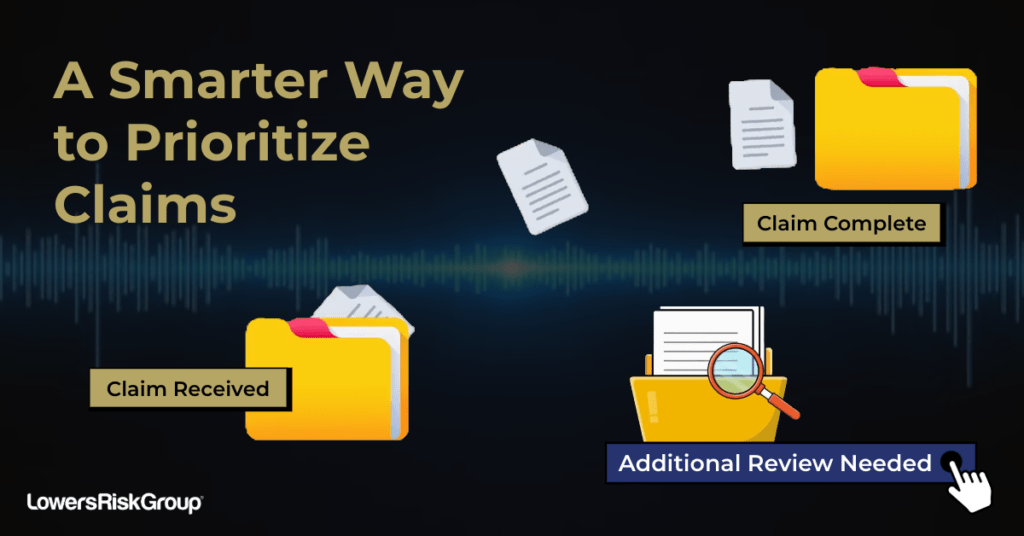
Claims teams are constantly balancing speed, accuracy, cost, and customer experience.
Most claims are legitimate and should move forward without unnecessary friction. Others may require additional documentation, verification, or investigation. The challenge is identifying which is which early enough to use time and resources effectively.
In many claims environments, that clarity only comes after an adjuster or investigator has already invested significant time in the file.
Behavioral intelligence offers another way to prioritize the process.
Why Early Direction Matters
First Notice of Loss, or FNOL, is one of the most important points in the claims lifecycle. It’s often the first opportunity to capture what happened, understand the circumstances, and determine how the claim should proceed.
It’s also a moment when claims teams are working with limited information.
A claim may appear routine based on the initial report but contain areas that would benefit from closer review. At the same time, an unusual detail or emotional response doesn’t necessarily mean a claim is fraudulent.
What claims professionals need is better direction.
Through its new Behavioral Intelligence practice, Lowers Risk Group is combining its experience across claims, investigations, and risk management with AuthentIQ’s Layered Voice Analysis technology.
Lowers Behavioral Intelligence, Powered by AuthentIQ can add a behavioral perspective early in the claims process. Through structured assessments, the technology evaluates reactions associated with cognitive conflict, emotional stress, uncertainty, and other indicators.
The results can help claims professionals identify which responses or subject areas may warrant additional attention.
Turning Indicators into a Clearer Path
Lowers Behavioral Intelligence can support a more focused approach to claims triage.
Assessments with lower indicators may support standard claims handling. Elevated indicators may lead the claims team to request additional documentation, ask more focused questions, verify specific details, or refer the matter for investigative review.
This helps teams align the level of attention with the information available.
For adjusters, it can provide clearer direction on which aspects of a claim deserve closer examination. For special investigations units, it can help prioritize referrals and focus limited resources. For claimants with straightforward claims, it may help reduce unnecessary investigative steps and delays.
The goal isn’t to introduce more friction. It’s to apply the right level of attention at the right time.
From Behavioral Indicators to Verified Evidence
The AuthentIQ technology that powers Lowers Behavioral Intelligence has already been used internationally to support claims investigations. One motor claim demonstrates how the technology can help give an investigation clearer direction.
A medical professional reported during an FNOL call that another vehicle had forced him off the road at night. There were no witnesses or third-party details, and the accident was reported the following day.
The AuthentIQ assessment returned lower indicators around basic information such as the date and time. Elevated indicators appeared around how the accident happened, the claimant’s actions afterward, possible alcohol consumption, and the description of the vehicle damage.
On a standard investigation call, those specific areas may not have received the same level of attention. The claim could have continued through the standard segmentation process without further investigation.
Instead, the AuthentIQ results gave the investigative team specific areas to examine more closely.
During follow-up, the investigator found:
- Cell records that placed the vehicle near several pubs that evening
- Bank-card transactions for alcohol purchases
- A tow-truck driver who reported smelling alcohol
- Vehicle damage that was inconsistent with the reported accident mechanics
The evidence supported a high probability that the driver had been intoxicated at the time of the accident. The claim was ultimately rejected for fraudulent misrepresentation.
The assessment didn’t provide the evidence used to make the claim decision. It helped investigators determine where to look for it.
Making Better Use of Claims Resources
The value of behavioral intelligence isn’t limited to identifying elevated indicators. Claims teams also need to know where extensive review may not be necessary.
When lower-indicator claims can remain within the standard workflow:
- Adjusters can spend more time on complex files
- Investigators can concentrate on claims where targeted follow-up is most likely to add value
- Claimants can experience a process that’s more proportionate to the information available.
This creates an opportunity to improve both fraud-risk management and the experience of legitimate policyholders.
Supporting Clearer, More Defensible Decisions
A focused process also strengthens documentation.
When an assessment identifies a subject area for closer review, the claims file can show what prompted the follow-up, which independent information was gathered, and how that information affected the outcome.
That’s especially important when a claim becomes disputed or moves toward litigation. Insurers and their legal partners need a clear connection between the initial concern, the investigative steps taken, the evidence gathered, and the final claim decision.
Behavioral indicators can help provide direction, while the investigation builds the factual record.
Better Claims Decisions Start with Better Direction
The strength of a claims process isn’t measured only by how quickly files are closed. It’s also measured by how effectively teams identify where their attention can make the greatest difference.
Through its Behavioral Intelligence practice, Lowers helps organizations apply these insights within the claims processes they already use. By combining behavioral indicators with claims expertise, established investigative methods, and targeted follow-up, insurers can create a clearer path from initial report to resolution.
For insurers, the opportunity isn’t simply to review more claims. It’s to review the right claims more effectively.
To explore how Lowers Behavioral Intelligence, Powered by AuthentIQ, could fit within your claims process, contact our team.