When an incident occurs, investigators rarely face a shortage of information. They may have access to interviews, transaction records, surveillance footage, access logs, reports, and other forms of evidence.
The challenge is knowing where to focus first.
An investigation involving theft, collusion, misconduct, or insider risk can quickly produce more leads, interviews, and possible explanations than a team can examine with the same level of attention. When time and resources are limited, prioritization becomes essential.
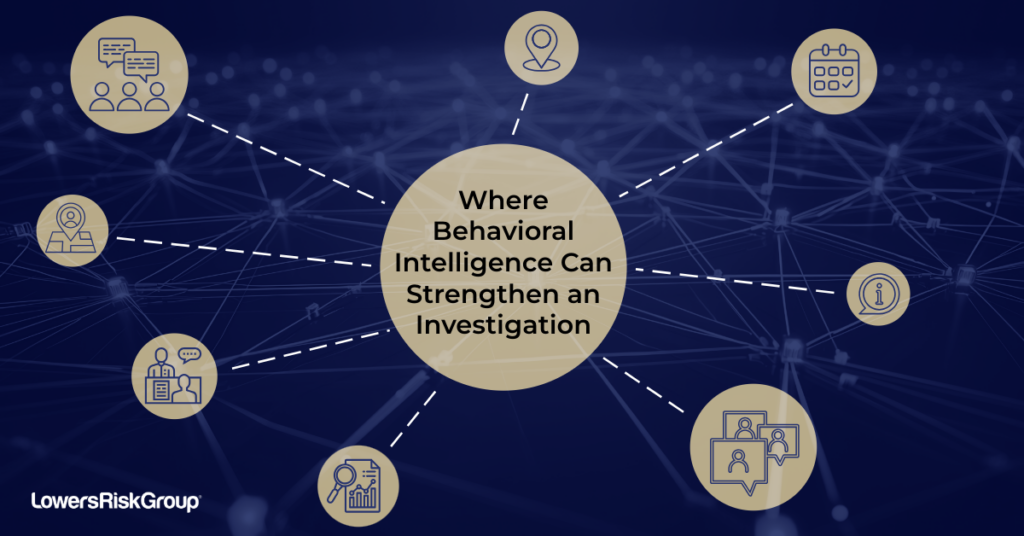
Behavioral intelligence can add another perspective by helping investigators identify which responses, subject areas, individuals, or locations may warrant closer review.
Looking Beyond What Happened
Traditional investigative methods provide essential information about an incident. Transaction records may show when an unusual activity occurred. Access logs can identify who entered a restricted area. Surveillance footage may capture movement around a location.
But those sources don’t always explain the human factors surrounding the event.
How are people responding to questions about what happened? Which topics produce elevated behavioral reactions? Are there particular areas where follow-up may be valuable?
Lowers Behavioral Intelligence, Powered by AuthentIQ combines Lowers’ expertise across investigations, security, and risk management with AuthentIQ’s Layered Voice Analysis technology.
Through structured assessments, the technology evaluates behavioral reactions associated with cognitive conflict, emotional stress, uncertainty, and other indicators. Lowers Behavioral Intelligence helps organizations apply those insights within a broader investigative process.
The purpose is to bring greater focus and direction to the investigation.
Focusing Resources Where They’re Needed
One of the clearest applications of behavioral intelligence is investigative prioritization.
The AuthentIQ technology that powers Lowers Behavioral Intelligence was used in an international case involving a logistics company experiencing increased warehouse theft across 16 distribution centers. A total of 218 employees completed structured assessments individually using a shared laptop.
Responses were provided across a mixture of South Africa’s 11 official languages, allowing the organization to assess a geographically and linguistically diverse workforce through one consistent process.
Approximately 76% of the assessments returned lower-risk results, while 24% produced elevated indicators. The results also revealed significant concentrations of elevated responses at two locations in the Western Cape.
Those two sites were only about 10 miles apart, and employees regularly moved between them to cover absences or provide additional support during large shipments. The organization believed that movement may have contributed to the similar behavioral patterns identified across both locations.
This gave investigators more than a list of individual results. It helped reveal an operational connection between the two sites that warranted closer examination.
Instead of applying the same level of scrutiny across every employee and location, investigators could focus follow-up interviews, documentation reviews, and other resources where they were most likely to add value.
Challenging Assumptions as Well as Identifying Concerns
Behavioral intelligence can also be valuable when workplace assumptions begin shaping an investigation before the facts are clear.
In another international use of AuthentIQ, new laptops were stolen from a learning academy. Employee collusion was suspected because the individuals responsible appeared to know where the equipment was stored.
Nineteen management and administrative employees who knew about the equipment’s arrival completed structured assessments. Before the assessments took place, five colleagues had already identified one employee as potentially involved.
All 19 assessments returned lower-risk results, although some individuals showed high levels of stress. Follow-up was conducted to determine whether those stress responses indicated involvement, and all 19 employees were ultimately cleared.
The organization concluded by reminding employees to be mindful of conversations held in public or within earshot of students.
The case also reinforced an important distinction: high stress isn’t the same as high risk, and it shouldn’t be treated as an admission of guilt.
Behavioral intelligence can help investigators identify where concerns may exist, but it can also help prevent speculation, workplace relationships, or unsupported accusations from determining the direction of an investigation.
Supporting Insider-Risk Decisions
Insider risk can involve more than one person acting alone. It may include collusion, information sharing, organized theft, misconduct, or individuals experiencing pressures that could affect their decisions.
These situations are difficult to assess through technical monitoring alone, particularly when several people, sites, or possible explanations are involved.
Lowers Behavioral intelligence can support a more focused approach by helping organizations:
- Identify responses or subject areas that may warrant additional questioning
- Recognize concentrations of elevated indicators across teams or locations
- Prioritize interviews and investigative resources
- Determine where additional documentation or independent verification may be useful
- Introduce employee support when indicators point to potential stress or wellness concerns
The assessment provides direction, but the value comes from what the organization does next.
Moving From Indicators to Action
Depending on the situation, follow-up may include comparing responses with transaction records, reviewing access or surveillance data, conducting another interview, examining controls at a specific location, or involving additional investigative specialists.
Lower indicators can also provide useful context by helping teams determine where the same level of scrutiny may not be necessary.
By combining behavioral indicators with established investigative methods, organizations can move from a broad field of possibilities to a more focused plan of action.
Better Insight from the Start
The strength of an investigation often depends on the quality of its direction. When teams know where to focus, they can use their time and expertise more effectively.
Lowers Behavioral Intelligence gives organizations another way to understand the human factors surrounding an incident, prioritize limited resources, and determine where closer examination may create the most value.
The question isn’t whether behavioral intelligence can replace an investigation. It’s where better behavioral insight could make the investigation stronger.
To explore how Lowers Behavioral Intelligence, Powered by AuthentIQ, could support your organization’s investigative or insider-risk needs, contact our team.